




When most homeowners think about attic ventilation, they picture blistering summer afternoons. It is easy to see the appeal: pulling superheated air out of your roof space eases the burden on your air conditioner and keeps your living area cooler. However, viewing attic ventilation strictly as a summer luxury is a costly mistake. As temperatures plunge, your roof space faces a completely different set of environmental threats. Winter introduces new challenges for attic moisture management. Warm, humid air from your living space can escape through ceiling gaps and other openings, where it encounters cold roof surfaces. Without proper air sealing, insulation, and ventilation, this moisture can accumulate and damage roofing materials over time. Highlighting proper airflow year-round is essential for smart energy efficiency and roof protection—even when there’s snow on the ground.
The Hidden Dangers of Poor Winter Ventilation
Moisture Accumulation and Condensation
Winter living keeps us indoors, where everyday activities—hot showers, cooking, running the dishwasher, and drying laundry—generate significant water vapor. Everyday activities such as showering, cooking, and doing laundry introduce moisture into indoor air. During winter, pressure differences and the natural upward movement of warm air can push moisture-laden air through gaps around ceiling fixtures, plumbing penetrations, attic hatches, and other openings. If this air reaches cold attic surfaces, condensation or frost can develop.
When warm, moisture-laden air reaches cold roof decking, its temperature can fall below the dew point. This causes water vapor to condense on the surface or form frost in freezing conditions. If moisture accumulates faster than the attic can dry, it can damage insulation and roof materials. The vapor rapidly condenses into water droplets, soaking exposed rafters and saturating your insulation.
Mold, Mildew, and Structural Decay
A damp, dark, and unventilated attic in winter creates an ideal environment for mold and mildew.
- Health Hazards: If mold develops in an attic, airborne spores may enter the living space through air leaks and other pathways. Depending on the extent of contamination and the building’s air circulation, this can contribute to indoor air quality problems.
- Structural Damage: Over time, trapped moisture leads to wood rot in your roof trusses and decking, rusts metal fasteners, and ruins ceiling drywall below.
- Higher Heating Bills: Moisture can compromise the effectiveness of some insulation materials, particularly when saturation or prolonged dampness occurs. Damaged or persistently wet insulation may need to be repaired or replaced to restore proper thermal performance.
The Threat of Ice Dams and Roof Damage
One of the most destructive winter phenomena is the ice dam. Ice dams develop when melting snow drains toward colder roof edges and refreezes. Heat escaping from the living space can warm portions of the roof and accelerate snowmelt, while solar heating and uneven roof temperatures can also contribute. As ice accumulates along the eaves, additional meltwater may collect behind it and work its way beneath shingles, potentially causing leaks and interior water damage.
How Solar Attic Fans Support Winter Roof Health
Passive attic ventilation relies on natural airflow created by wind and temperature differences. Although airflow can vary with weather conditions and some vents may become obstructed by snow, properly designed and maintained passive ventilation systems are widely used to help control winter moisture and roof temperatures. Solar attic fans deliver active, regulated, proper airflow year-round to keep your roof system protected.
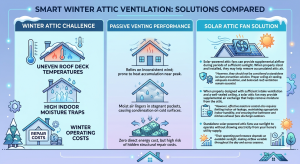
By maintaining a cold, uniform roof deck and forcefully exhausting moisture during the daytime hours when solar energy is available, solar fans protect both your stored belongings and your home’s structural framing.
Essential Winter Maintenance for Your Solar Attic Ventilation System
To ensure your solar ventilation system operates at peak efficiency throughout the winter, follow this quick seasonal maintenance checklist:
- Clear Snow Off the Panel: Safely brush away heavy snow accumulations from the solar panel surface after major storms to restore sunlight exposure.
- Remove Autumn Debris: Clear stray leaves, twigs, and pine needles from around intake and exhaust pathways.
- Check Soffit and Intake Vents: Inspect inside the attic to ensure insulation blown into the eaves hasn’t blocked your intake vents—active ventilation requires unobstructed intake paths to ensure proper airflow.
- Inspect Hardware Seals: Extreme cold can cause materials to contract; inspect the roof flashing and hardware seals to verify your unit remains 100% watertight.
Protect Your Roof 365 Days a Year
Attic ventilation isn’t a seasonal setting you turn off when summer ends—it is a continuous defense system for your home. By maintaining proper attic insulation, sealing air leaks, managing indoor humidity, and ensuring adequate ventilation, you can significantly reduce the risk of mold, structural deterioration, and ice dam formation during winter.
Don’t wait for winter roof leaks to reveal hidden moisture problems. Take time to inspect your attic airflow today. Explore how Solar Royal’s solar attic fans can provide supplemental ventilation as part of a properly designed attic moisture-management system.