




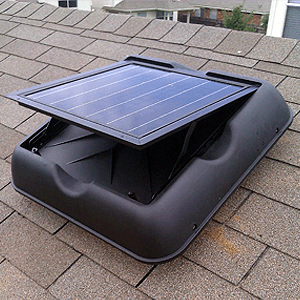
A solar attic fan is an active ventilation system powered by sunlight, while a ridge vent is a passive system that depends on natural airflow. In most cases, active ventilation will outperform passive ventilation because it removes hot attic air more aggressively when heat levels are highest.
Solar Attic Fan or Ridge Vent
When homeowners start researching attic ventilation, one question comes up again and again: should you install a solar attic fan or stick with a ridge vent?
It is a smart question. Attic ventilation affects more than just the temperature under your roof. It can influence comfort inside the home, how much heat builds up in upper rooms, moisture conditions in the attic, and the long-term performance of roofing materials. In hot regions especially, poor ventilation can turn the attic into a heat trap that makes the whole house harder to keep comfortable.
The challenge is that solar attic fans and ridge vents solve the same problem in very different ways. A solar attic fan uses active ventilation powered by sunlight, while a ridge vent relies on passive airflow through the roofline. SolarRoyal explains this distinction clearly in its FAQ, noting that a solar attic fan provides active ventilation, while ridge vents provide passive ventilation. (Solar Royal –)
So which one is better?
In most cases, a solar attic fan will be the better choice over a ridge vent because it provides active ventilation rather than relying on passive airflow alone. Active ventilation is designed to move hot air out of the attic more aggressively, especially during the hottest and sunniest parts of the day when attic temperatures are at their worst. By comparison, a ridge vent depends on natural air movement, roof design, and environmental conditions, which can limit its performance in demanding heat conditions. SolarRoyal’s own FAQ draws this distinction clearly by describing solar attic fans as active ventilation and ridge vents as passive ventilation. (Solar Royal –)
That said, ridge vents can still be useful in some situations, particularly where a homeowner wants a simple passive system and the roof design supports balanced airflow. But when the goal is stronger ventilation performance, faster heat removal, and a more responsive solution for hot attic conditions, active ventilation will usually have the advantage.
This guide will walk through the key differences so you can make a more informed decision.
What Is a Solar Attic Fan?
A solar attic fan is an attic ventilation device powered by solar energy. Its job is to actively exhaust hot, stale air from the attic, especially during sunny periods when attic temperatures are usually at their highest. Because it is solar-powered, the fan naturally ramps up when sunlight is strong and attic heat is most intense.
In simple terms, a solar attic fan is designed to do more than wait for air to move on its own. It actively helps pull heated air out of the attic so that cooler outside air can enter through intake vents, such as soffit vents, when the ventilation system is balanced correctly.
How a Solar Attic Fan Works
As the sun heats the roof, the solar panel powers the fan. The fan then exhausts hot air from the attic space. That process can reduce heat buildup and improve airflow during the part of the day when attic temperatures often peak. One reason many homeowners are drawn to solar attic fans is that they operate without direct grid electricity.
Why Homeowners Choose Solar Attic Fans
Homeowners often choose solar attic fans because they want stronger daytime ventilation, especially in hot and sunny climates. This can be appealing if upper rooms stay hot, if the attic feels excessively overheated in summer, or if passive ventilation has not seemed sufficient.
These systems can also be attractive for detached structures and specialty buildings. SolarRoyal specifically markets its solar attic fans for homes, garages, barns, sheds, multi-family buildings, and commercial spaces.
What Is a Ridge Vent?
A ridge vent is a passive attic ventilation system installed along the peak of the roof. Instead of using a motor or solar power, it allows rising hot air to escape naturally through an opening at the ridge. When the attic ventilation system is properly balanced, cooler air enters through intake vents lower on the roof, such as soffit vents, while warm air exits through the ridge vent.
Because ridge vents do not use powered exhaust, many homeowners see them as a simpler and lower-maintenance option. However, they depend heavily on roof design, available intake ventilation, and natural air movement.
How a Ridge Vent Works
A ridge vent relies on natural convection. Warm air rises to the highest point of the attic, where it exits through the vent at the roof ridge. This creates an opportunity for cooler outside air to enter from lower intake vents.
When the system is designed well, ridge vents can provide continuous ventilation without moving parts. But unlike a solar attic fan, a ridge vent does not force air movement. Its performance depends on conditions that support passive airflow.
Why Homeowners Choose Ridge Vents
Many homeowners choose ridge vents because they are low-profile, passive, and often integrated during a roof replacement. They can be a strong option when the roofline is suited for continuous ridge ventilation and the home already has balanced intake ventilation.
For homeowners who value simplicity and minimal mechanical components, ridge vents can be appealing. That said, passive systems do not always deliver the same intensity of airflow as an active solar-powered fan.
The Core Difference Between Solar Attic Fans and Ridge Vents
The most important distinction is simple.
- A solar attic fan is active ventilation.
- A ridge vent is passive ventilation.
That difference shapes everything else, from airflow performance to installation strategy.
With a solar attic fan, heat is actively exhausted from the attic when sunlight powers the unit. With a ridge vent, warm air leaves the attic through natural air movement. This matters because active ventilation is generally superior when the goal is to move more heat out of the attic, faster and more consistently, during the hottest parts of the day. Passive ventilation still has a place, but it usually cannot match the responsiveness of an active solar-powered system in tougher heat conditions.
Cooling Performance: Which System Moves Heat More Effectively?
This is where many homeowners focus first, and for good reason. The main purpose of attic ventilation is to help remove accumulated heat and stale air from the attic.
A solar attic fan is designed to move air more aggressively because it is powered. During sunny periods, when the attic is often hottest, the fan actively exhausts air. A ridge vent can also perform well, but its performance depends more heavily on attic design, intake ventilation, wind conditions, and the natural tendency of warm air to rise. In some homes, that is enough. In others, especially where attic temperatures become extreme, passive ventilation may not feel as effective as a powered system.
That is why, in many real-world situations where ventilation performance is the priority, a solar attic fan will have the edge. It is simply built to do more than allow air to drift out naturally. It is built to move it.
Energy Use and Operating Cost
One of the strongest arguments in favor of both systems is that neither operates like a traditional grid-powered attic fan.
A ridge vent uses no electricity because it is passive. It simply allows air to move naturally through the roofline.
A solar attic fan also avoids direct utility-powered operation because it runs on solar energy.
For homeowners comparing operating cost alone, both options can be attractive. The bigger difference is not monthly utility use. It is how each system moves air and whether that airflow is strong enough for the home’s needs.
Installation Considerations
Installation is another major factor when comparing these systems.
A ridge vent is often easiest to install during a reroofing project because it requires work along the ridge of the roof. For that reason, ridge vents are frequently considered when homeowners are already replacing shingles or updating roofing materials.
A solar attic fan is usually installed as a roof-mounted unit, and installation quality matters. Proper flashing, waterproofing, placement, and integration with the rest of the ventilation system are essential. SolarRoyal’s SR1800 fan is faster and easier to install, especially on an existing roof, than a ridge vent.
For homeowners comparing the two, the practical question is not only which system performs better, but which one fits the roof, project timing, and installation goals more naturally.
Maintenance and Long-Term Simplicity
Ridge vents are often viewed as the lower-maintenance option because they have no moving parts. That simplicity is a legitimate advantage. Once installed correctly, they generally require less attention than powered equipment.
A solar attic fan, by comparison, includes mechanical components. Even a high-quality unit may require occasional inspection over time. Homeowners may want to check the fan, flashing, and surrounding roof area periodically to make sure the system remains in good condition.
That said, not all solar attic fans are built the same way. SolarRoyal emphasizes maintainability and product access as part of its SR1800 design and support positioning.
In other words, maintenance is not simply about whether a system is passive or active. Product quality, installation quality, and long-term serviceability all matter.
Climate and Home Type Matter More Than Many Homeowners Realize
Climate plays a major role in attic ventilation performance. In hot, sunny climates, a solar attic fan often has a clear appeal because it responds when solar gain is strongest. For homes in these climates, active ventilation can be worth serious consideration.
Ridge vents can still be an excellent option in some homes, particularly when the attic already has well-balanced intake airflow. Some homeowners also prefer ridge vents because they blend into the roofline and avoid mechanical components.
Home type matters as well. Solar attic fans may be especially useful for garages, barns, workshops, sheds, and other spaces where active daytime heat removal is helpful.
Can You Use a Solar Attic Fan and Ridge Vent Together?
This is a common question. In theory, some homes may use multiple ventilation elements, but attic ventilation should always be treated as a system. It is not wise to assume that adding more exhaust automatically improves performance. The balance between intake and exhaust matters, and poorly coordinated ventilation can create unintended airflow patterns.
That means homeowners should avoid mixing systems casually without understanding how the attic is designed to breathe. The best approach is to evaluate the attic as a complete ventilation system, including soffit vents, roof design, heat patterns, and moisture conditions.
If there is uncertainty, professional assessment is a good next step before combining ventilation methods.
Pros and Cons of a Solar Attic Fan
A solar attic fan offers active ventilation, which can be very appealing in hot climates and overheated attics. It can provide stronger airflow during the times when attic temperatures are most intense. It also operates on solar power rather than drawing from household electricity, and it can be useful across many property types, from homes to garages to agricultural and commercial structures.
On the other hand, solar attic fans do include moving parts, so maintenance expectations are different from a passive vent. Installation quality matters a great deal, and product quality varies across the market. Homeowners should compare construction, serviceability, support, and installation design rather than assuming all units perform the same.
Pros and Cons of a Ridge Vent
A ridge vent provides passive ventilation with no motorized parts, which makes it attractive for homeowners who want a lower-maintenance and visually subtle solution. It is often a natural fit during reroofing projects and can work well when roof design and intake ventilation are properly balanced.
The tradeoff is that ridge vents do not actively force airflow. Their effectiveness depends on the home’s ventilation design and natural conditions. For homes with severe attic heat buildup, passive ventilation may not always feel as responsive as an active solar-powered fan.
Which Option Is Better for Your Home?
If your main goal is stronger daytime heat removal in a hot, sunny climate, a solar attic fan will usually be the better option. This is especially true if your attic experiences intense heat buildup, if upper rooms stay uncomfortable, or if you want an active ventilation system that operates without direct utility power.
If your main goal is a simple, passive, low-profile system and your roof is already suited for balanced ridge ventilation, a ridge vent may still be worth considering.
A useful way to think about the decision is this:
- Choose a solar attic fan if you want active ventilation and stronger airflow during hot sunny conditions.
- Choose a ridge vent if you want passive ventilation with no moving parts and your roof design supports it well.
- Choose based on your attic system as a whole, not just one product feature.
In most performance-driven comparisons, however, a solar attic fan will come out ahead because active ventilation is simply better suited to moving hot air out of the attic under challenging conditions.
Final Verdict
So, which ventilation system is better for your home, a solar attic fan or a ridge vent?
In most cases, a solar attic fan is the better option because active ventilation is generally more effective than passive ventilation at removing trapped heat from an attic. A solar attic fan works when the sun is strongest and attic temperatures are highest, giving homeowners a more responsive and performance-driven solution. A ridge vent can still provide useful airflow, but because it depends on passive air movement, it usually cannot match the ventilation strength of an active solar-powered fan under demanding conditions.
For homeowners dealing with intense attic heat, hot upper floors, garages, barns, sheds, or other buildings that need stronger daytime airflow, a solar attic fan will usually be the superior choice. SolarRoyal designs its ventilation products for residential, commercial, agricultural, and utility applications, which makes that active-ventilation approach relevant across more than just traditional homes.
If ventilation performance, solar-powered operation, and a purpose-built attic cooling solution are your priorities, SolarRoyal’s product line is worth serious consideration. The SR1800 Series is a modular solar attic ventilation solution that emphasizes installation design, maintainability, and high-performance ventilation for demanding heat conditions.
The smartest next step is to assess your attic heat levels, intake ventilation, roof configuration, and climate before making a final decision.
Why Homeowners Choose SolarRoyal
Choosing the right attic ventilation system is important, but choosing the right product matters just as much. SolarRoyal focuses specifically on premium solar attic ventilation fans and related airflow solutions rather than treating attic ventilation as an afterthought. Its materials emphasize active ventilation performance, solar-powered operation, broad application flexibility, and product development centered on real-world installation and service needs.
Take the Next Step
If your attic is trapping heat, your upper rooms stay too warm, or you are looking for a more effective alternative to passive ventilation, now is the time to explore a solar attic fan solution.
SolarRoyal offers solar attic ventilation products for homes, garages, sheds, barns, commercial spaces, and other demanding applications. If you are ready to compare options, review specifications, or speak with a representative about the best fit for your property, SolarRoyal provides product information and direct contact details through its website.
Frequently Asked Questions
Is a solar attic fan better than a ridge vent?
In most cases, yes. A solar attic fan may be better because it provides active ventilation, which is generally more effective at removing attic heat than passive ventilation. Ridge vents can still work well in the right roof design, but they usually do not match the ventilation strength of an active system.
Do ridge vents use electricity?
No. Ridge vents are passive systems and do not use electricity.
Do solar attic fans require electricity from the home?
No. Solar-powered attic fans are designed to run on solar energy rather than direct household electricity.
Which option is better for hot climates?
Many homeowners in hot sunny climates prefer solar attic fans because they actively remove heat during peak sun hours.
Can a solar attic fan work on buildings other than a home?
Yes. SolarRoyal specifically designs its solar ventilation fans for garages, sheds, barns, commercial spaces, and other structures in addition to standard residential attics.
Is a ridge vent easier to maintain?
In general, ridge vents are often considered easier to maintain because they have no moving parts. However, proper installation and overall attic ventilation design still matter.